Simple Hairstyles for Babies With Fine Hair
Disclosure: Some of the links in this post are affiliate links. This means if you click on the link and purchase an item, I will receive an affiliate commission at no extra cost to you.
Fine hair is not the same as short hair, and that distinction matters a lot for styling.
A baby with fine hair might have plenty of length but very little thickness to work with, which changes what actually holds and what falls flat.
Finding hairstyles for babies with fine hair that actually work takes a slightly different approach than styling thicker textures. This guide covers what to expect and which styles tend to work best.
It helps to start by separating three terms that often get used interchangeably: fine, thin, and sparse. Fine describes the width of each individual strand, thin usually refers to overall density, and sparse describes areas with noticeably less growth.
The Different Kids Hair Textures Explained breaks these distinctions down further if you want a clearer picture of where your baby’s hair fits.
A baby can have thin, coarse hair or thick, fine hair, and the right styling approach depends on knowing which combination you are actually working with.

What Makes Fine Hair Different to Style
Fine hair refers to strand width, not the overall amount of hair on the head, and that trips up a lot of parents.
Fine strands tend to hold less volume and can look flat more quickly than thicker textures, even right after styling.
They are also more prone to slipping out of elastics and clips since there is less bulk to hold an accessory in place.
This is one of the main reasons hairstyles for babies with fine hair often need small adjustments compared to general styling advice.
Choosing snugger, gentler accessories designed for finer textures usually solves the slipping problem without needing anything tighter.
Hair Bows for Kids That Stay in Place has more specific advice on this.
Signs Your Baby Has Fine Hair
Fine hair often looks and feels silky or even slippery between your fingers, almost slipping through rather than gripping back.
Styles like ponytails may look great right after styling but flatten out within an hour or two, which is a common sign of fine texture.
It is also common for fine hair to feel drier at the ends than at the roots, since natural oils have a harder time coating thinner strands evenly.
Watching how quickly a style loses its shape over the course of a day is one of the clearest practical signs you are dealing with fine texture.
Baby Hair Milestones Every Parent Should Know covers how hair changes over the first few years, since fine hair at one stage does not always stay fine as your baby grows.
Does Fine Hair Need Special Nutrition or Growth Support
Fine hair itself is not a sign of a nutritional issue, and most babies with fine strands are perfectly healthy.
Genetics play a much bigger role in strand width than diet does, so there is rarely a need to make major dietary changes based on fine hair alone.
That said, general hair health habits like gentle handling, regular moisture, and protecting against breakage matter just as much, if not more, for fine strands.
Healthy Habits That Support Kids Hair Growth is worth a look if you want a broader routine that supports fine hair specifically, and consistency tends to matter more than any single product or supplement.
20 Simple Styles for Fine Baby Hair
These styles are chosen because they hold well on fine textures without needing thick sections or heavy products.
How to Build a Healthy Hair Routine for Kids can help you fit them into a broader routine over time.
Each one uses gentle tension and minimal manipulation, both of which matter more for fine, delicate strands.
Try a few and see which ones your baby tolerates and which hold up best through the day.
1. Teased Low Ponytail
Lightly teasing the crown before gathering hair into a low ponytail adds lift to the hair .
Straight strands cannot create on their own.
It works well for shoulder length or shorter fine hair.
Gently backcomb the crown, gather hair loosely at the nape, and secure with a soft elastic.

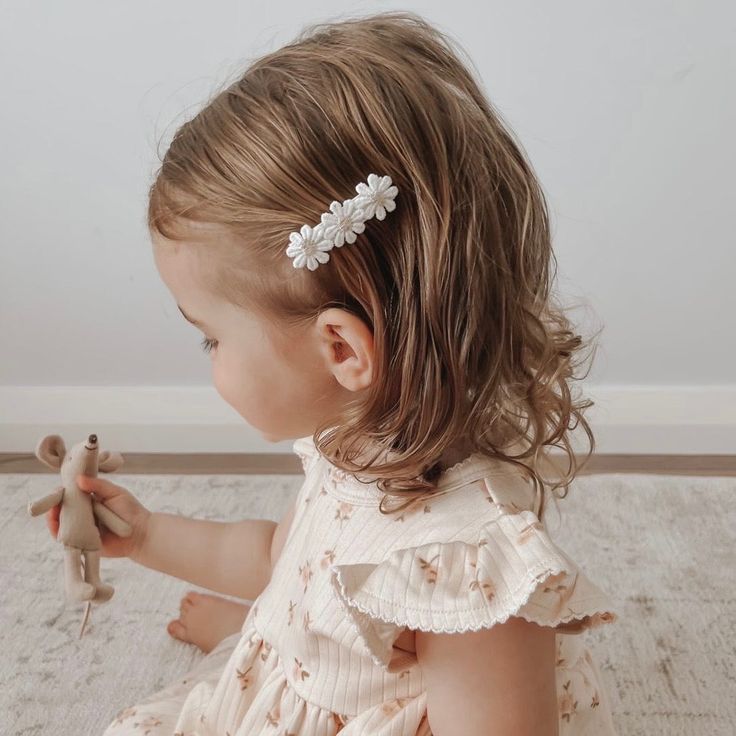
2. Snug Side Clip
A small clip pinned snugly close to the scalp holds far better on fine hair than one placed loosely.
This works for almost any length and suits babies just growing out their bangs.
Brush hair to one side and secure with a small, lightweight clip close to the root.
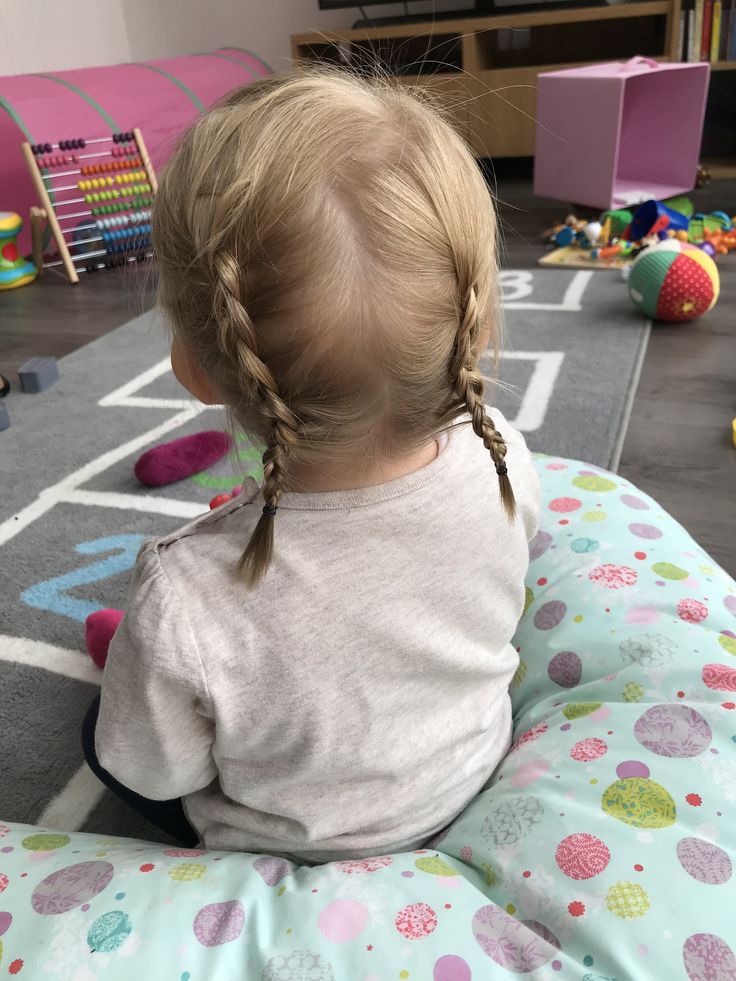
3. Mini French Plaits
Two small, neatly braided plaits from the crown down hold securely on fine hair without needing much length to start.
This suits fine hair with just a few inches to work with, since a French braid gathers in new hair as it goes.
Part hair into two sections, French braid each from the crown down, and secure the ends with a small elastic.
4. Satin Headband Style
A soft satin headband holds fine hair back without any pulling or tension at all.
This works well for babies whose hair is still too short or fine for elastics to hold.
Slide the headband back from the hairline over freshly brushed hair.

5. Front Section Pigtails
Only the front sections are gathered into two tiny pigtails while the rest of the hair stays down.
Works well when there isn’t enough length yet for a full pigtail.
This suits very fine or shorter hair that can’t hold a full style at the back.
Part off a small section near each temple and secure with a tiny, soft elastic, leaving the rest down.

6. Single Top Ponytail
Gathering just the small tuft of hair at the very top of the head into one tiny ponytail works even when there isn’t enough hair anywhere else to style.
This suits babies with sparse or very fine hair who don’t yet have enough length for a full puff or pigtails.
Gently gather the top section and secure with a small, snag-free elastic.

7.Twin Pigtails
Two small sections gathered low near the nape work even when hair is short or fine.
This suits babies who don’t yet have length for a full ponytail.
Gather a small section on each side low near the nape and secure with a soft elastic or bow clip.

8. Gentle Top Knot
A tiny top knot works once hair has enough length to twist.
The twisted shape holds longer than a plain bun on thin strands.
Gather hair at the crown, twist gently, and secure loosely.

9. Half-Up Pony With Bow
Gathering just the top section leaves the rest down while keeping hair out of the face.
A bow at the base adds a finished look without extra bulk.
Gather the top section loosely, secure with a soft elastic, and add a bow.

10. Layered Double Clips
Two small bows clipped one above the other hold tiny wisps of hair even on very short strands.
It works well with barely any length at all.
Clip one small section near the crown and one just below it, securing each with a tiny clip.

11. Pony With Braided Accent
Small braided sections feed up from the front into a high top ponytail, keeping hair neatly off the face.
It works with just a short length at the crown.
Braid a few small front sections back, gather into a high ponytail, and finish with a bow.

12. Colorful Clip Row
A row of small sections clipped with tiny colorful bows holds flyaways flat with barely any hair needed.
It works well on short or fine strands.
Part off small sections in a row and secure each with a tiny bow clip.

13. Stacked Part Elastics
Small elastics placed one after another down a deep side part hold flyaways flat with barely any hair.
It works well even on short, fine strands.
Part hair deeply to one side and secure small sections down the part with tiny elastics.

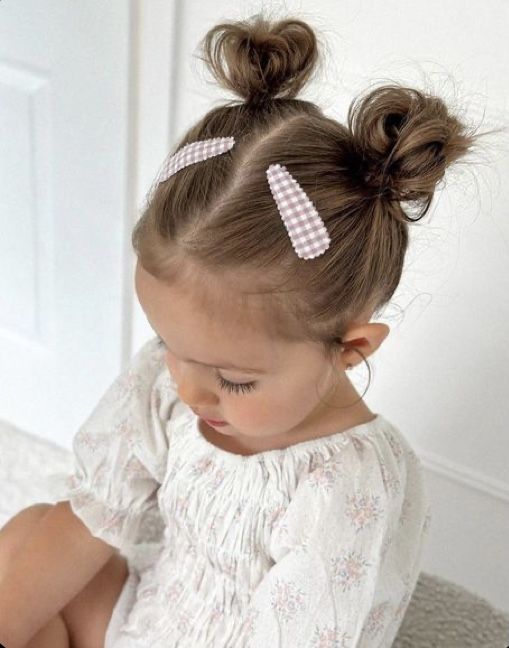
14. Space Buns with Clips
Two tiny twisted buns near the crown hold small sections up even with limited length.
A small clip at the base of each keeps flyaways tidy.
Twist a small section at each side into a loop and secure with a clip.
15. Low Ponytail
Gathering hair low at the nape keeps fine hair neat without much tension.
A soft scrunchie holds it without pulling on delicate strands.
Gather hair low and secure gently with a soft scrunchie.

16. Braided Half-Up Pigtails
Small braided sections feed into two half-up pigtails secured with elastics.
It works even with medium-short hair.
Braid a small section on each side, gather into a half-up pigtail, and secure with a soft elastic.

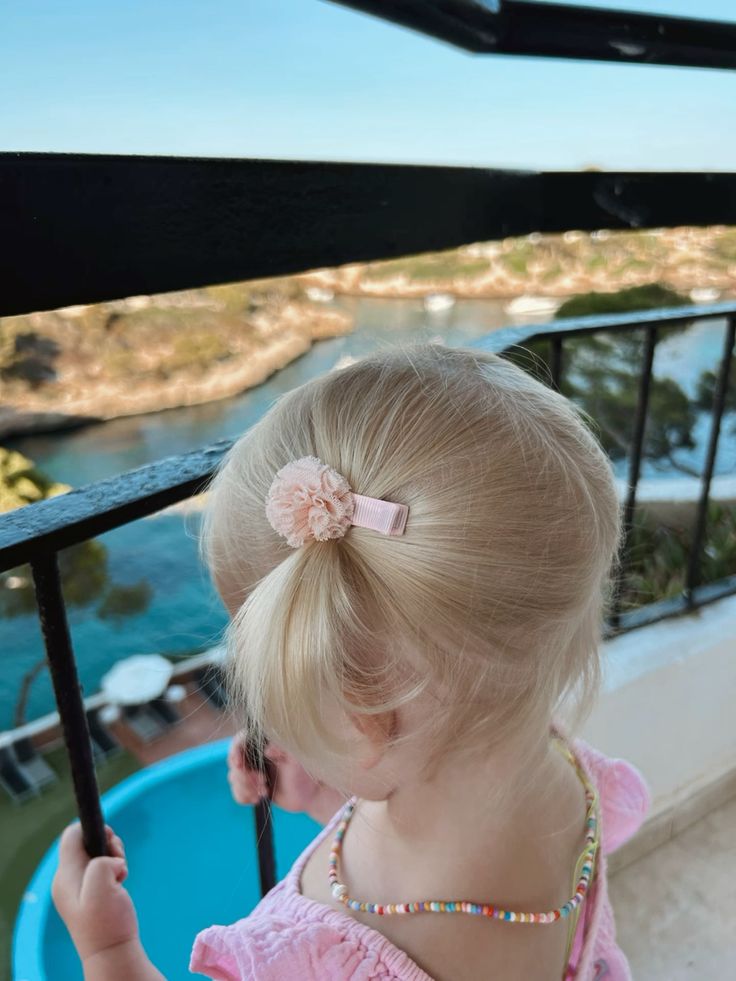
17. Side Ponytail with Flower Clip
A low ponytail pulled to one side keeps fine hair neat without much tension.
A small flower clip at the base finishes the look.
Gather hair low to one side, secure with a soft elastic, and clip a small flower accessory over the base.
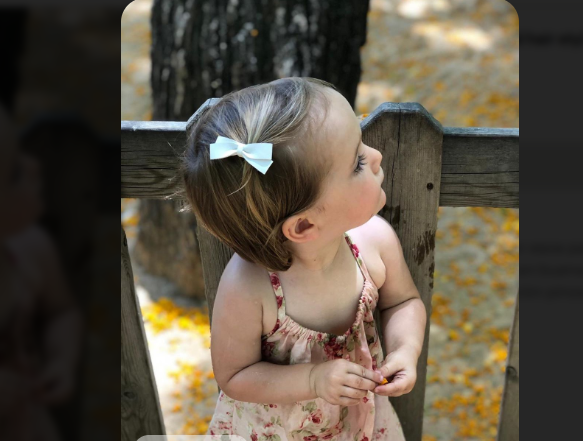
18. Pinned Fringe Sweep
A single small pin sweeps shorter face-framing pieces to one side.
It works without needing enough length to tie back.
Brush the front pieces over and secure with a small, flat pin.
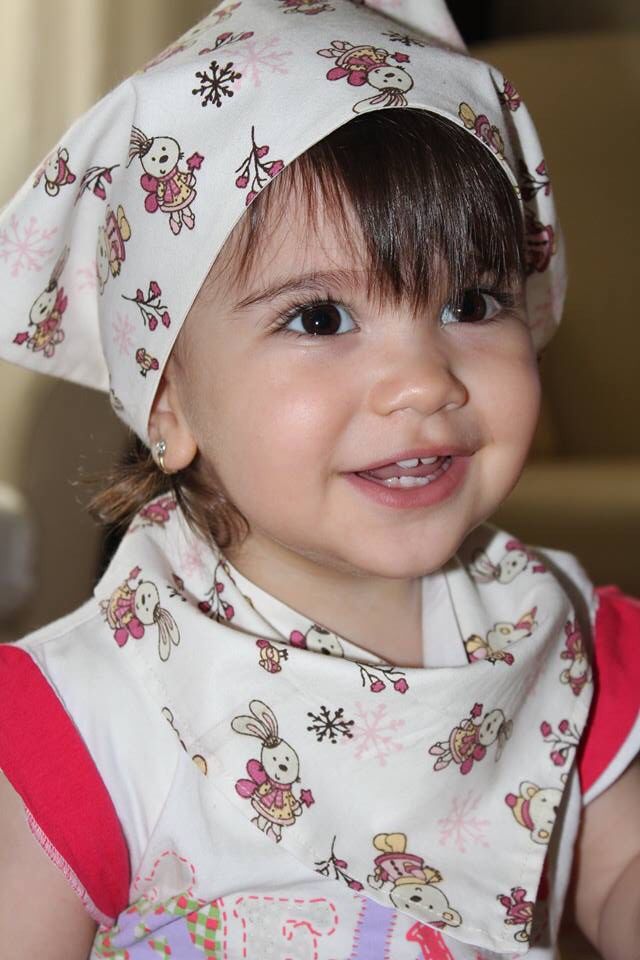
19.Bandana Wrap
A soft bandana tied over the head covers fine or thin hair completely, no styling needed.
It works for any length, even with very little hair.
Fold a bandana and tie it snugly around the head, covering the hairline.
20. Half-Up Space Bun
A single small bun near the crown keeps hair off the face while the rest stays down.
It works well with just enough length up top.
Gather a small top section, twist into a loop, and secure loosely.

Products and Tools That Work Best for Fine Hair
Lightweight products make the biggest difference when styling fine hair, since heavier creams and butters can weigh strands down and flatten volume quickly.
Leave-In Conditioner vs Hair Milk for Kids compares two lighter options that tend to work well for finer textures.
A little goes a long way, and using too much product is one of the fastest ways to make fine hair look greasy or flat.
A soft bristled brush is usually gentler on fine strands than a comb, especially for daily styling.
Choosing the right tools alongside the right products makes a noticeable difference in how long any of these styles actually hold up through the day.

Adding Volume Without Overdoing It
A little volume can make fine hair styles look fuller and hold their shape longer, though it does not take much to achieve.
Lightly teasing or backcombing the crown section before styling can add noticeable lift without any special products.
The Hidden Reason Your Child’s Hair Looks Dull explains how product buildup can actually work against volume, weighing hair down over time.
Drying hair with a gentle upward motion, rather than letting it fall flat, also helps fine hair keep more natural body throughout the day
Avoiding heavy oils directly at the roots keeps volume from collapsing as quickly.
Practical Tips for Styling Fine Hair
Style hair while it is slightly damp rather than fully dry, since fine hair tends to hold shape better with a little moisture.
How to Moisturize Kids Hair Properly goes deeper into layering products the right way for delicate strands.
Working quickly once hair is styled also helps, since fine hair tends to lose its shape faster than thicker textures the longer it sits before setting.
Rotating between a few different styles throughout the week can help prevent constant tension on the same spot, which matters even with gentle styles.
Could Your Child’s Hair Accessories Be Causing Breakage? covers how repeated tension, even light tension, can add up on delicate fine strands.
Trimming split or uneven ends every couple of months can also help fine hair look fuller and healthier overall.
Small, regular trims tend to make a bigger visible difference on fine hair than on thicker textures.
Common Mistakes to Avoid
Using too much product is one of the most common mistakes with fine hair, since heavier formulas weigh strands down almost immediately.
Why Expensive Hair Products Aren’t Always Better explains why lighter, simpler products usually outperform richer ones on finer textures.
Choosing accessories meant for thicker hair is another common misstep, since heavier clips and elastics can slip out or pull unevenly on fine strands.
The Best Hair Accessories for Kids has options specifically suited to lighter, finer hair types.
Brushing fine hair too roughly or too often is worth avoiding too, since fine strands are more prone to breakage from excess friction.
Why Your Child Hates Hair Time (and How to Change It) offers gentler approaches if brushing sessions tend to end in tears.
Frequently Asked Questions
Will my baby’s fine hair get thicker as they grow?
Hair texture and thickness often change significantly during the first few years, so fine hair at one stage does not necessarily stay that way.
41 Cute Hairstyles for One-Year-Old Girls has ideas worth revisiting once your baby’s texture starts to shift.
Genetics play the biggest role in this kind of change over time.
Are there specific brushes better suited for fine hair?
Soft bristled brushes made for babies work best on fine hair.
Firmer bristles can cause unnecessary breakage.
Wide tooth combs also work well for detangling without excessive pulling.
How often should I wash fine baby hair?
Fine hair often shows oil buildup a bit faster than thicker textures.
How Often Should You Wash Your Child’s Hair? offers general guidance that can be adjusted slightly for finer textures.
Two to three times a week is typically still enough for most babies.
Can I use heat tools on my baby’s fine hair?
Heat tools aren’t recommended for babies or young toddlers.
Fine hair is especially vulnerable to heat damage.
The Best Hair Oils for Children’s Hair covers ways to keep hair smooth without reaching for heat.
Why does my baby’s fine hair tangle so easily?
Fine strands tangle more easily than thicker hair.
They’re more prone to wrapping around each other.
The Secret to Tear-Free Detangling covers gentle techniques for delicate, fine textures.
Is it normal for fine hair to look different in humid or dry weather?
Yes, fine hair reacts more visibly to weather changes.
It can look flatter in humidity and staticky in dry air.
A light leave-in product helps buffer against both extremes.
Final Thoughts
Hairstyles for babies with fine hair do not need to be complicated to look good and hold up through the day.
Choosing the right products, tools, and gentle styles makes far more difference than any single trick or technique.
When Should You Start Styling Your Baby’s Hair? is a helpful next read if you are still figuring out the right time to start trying new looks.
Toddler Hair Care Made Simple is worth bookmarking too, since fine hair often changes quite a bit over the coming months and years.