
23 Natural Hairstyles for Boys
Disclosure: Some of the links in this post are affiliate links. This means if you click on the link and purchase an item, I will receive an affiliate commission at no extra cost to you.
Natural hair has a texture and personality all its own, and the right style can highlight that instead of fighting against it.
Some styles need only a few minutes of finger-styling in the morning, while others give hair a rest from daily manipulation altogether.
This list of natural hairstyles for boys covers both ends of that range, from quick everyday looks to styles that last for weeks.
This roundup includes afros, twists, locs, and several low-maintenance curly options that work across a wide range of textures and lengths.
Trying a new style together every so often often turns into a small routine worth looking forward to. The Complete Beginner’s Guide to Kids Hair Care is a solid starting point if natural hair styling still feels new.
Many of these styles can also transition into one another as hair grows, which makes it easier to plan out a longer-term styling routine.
Every curl and coil pattern behaves a little differently, so knowing your child’s texture helps narrow down which natural hairstyles for boys will work best.
How to Identify Your Child’s Hair Type covers the basics of figuring that out before your next styling session at home.
Below are 23 styles sorted into four easy categories, so there is something here for nearly any texture, length, and activity level.
Some are quick to put together at home, while others benefit from a barber or braider with experience in natural textures.

Afro and Fade Styles
This category pairs natural curl or coil volume with a shaped edge or fade for a look that stays neat between trims.
These styles suit medium to thick textures especially well and tend to need only a light oil or cream for daily upkeep.
A fresh shape-up every few weeks keeps most of these styles looking sharp.
23 Cute Haircuts for Boys has more shape and fade ideas worth browsing alongside this list.
1. Afro
The classic afro lets natural curls or coils grow into a full, rounded shape without a fade or taper on the sides.
It suits medium to long coily hair especially well. Regular picking helps keep the shape even and full throughout the week.
The Best Wash Day Routine for Kids covers how often to wash and re-oil this style to keep the volume looking healthy.

2. Tapered Afro
The tapered afro trims the sides shorter while the top grows into a rounded shape.
It suits boys who want a fuller top with a more managed silhouette overall.
A pick comb helps maintain the tapered edge between barber visits.
This balance makes it a solid everyday option for school and sports.
3. High Top
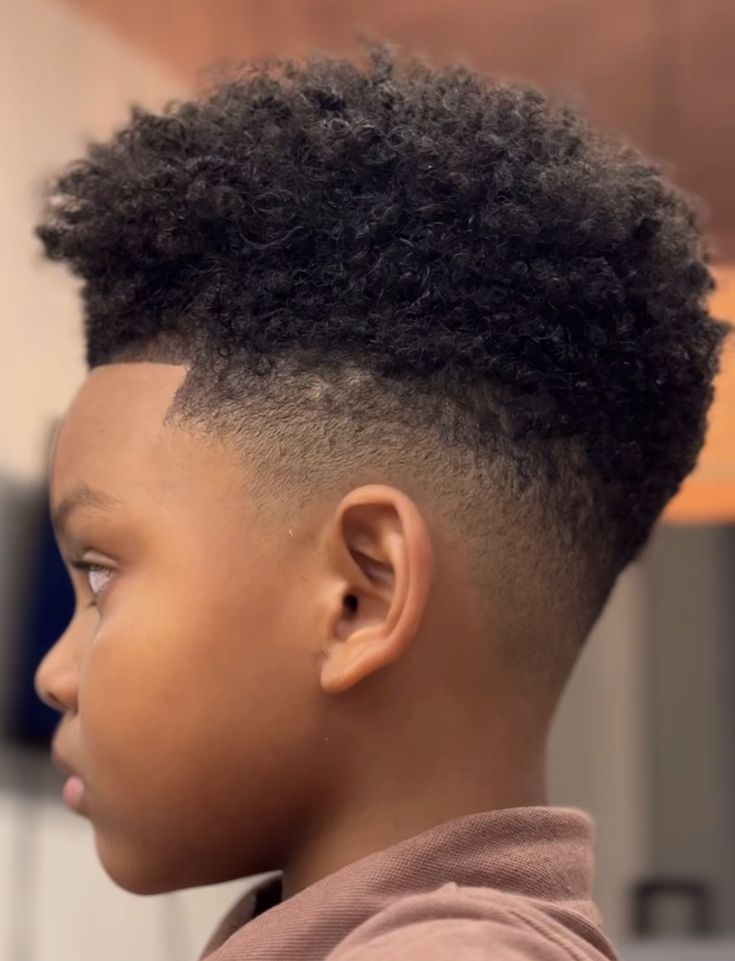
The high top shapes natural hair into a tall, boxy silhouette on top, often paired with a fade on the sides.
It suits thick, coily hair that holds volume well.
A flat brush and light hold product help maintain the shape throughout the day.
How Often Should Kids Get Haircuts? is worth a read since this style needs regular trims to hold its crisp shape.

4. Flat Top
The flat top trims natural hair into a level, squared-off shape across the crown.
It suits thick, dense textures that hold their shape without much extra product.
A flat brush and light hold cream help keep the top looking sharp and even.
Regular trims are needed to maintain the crisp, level edge, since new growth can round out the corners quickly.

5. Frohawk
The Frohawk combines a mohawk shape with natural volume down the center strip, while the sides are faded or trimmed shorter.
It suits boys who want a bold, textured statement cut.
A curl-defining cream or gel helps the center strip hold its shape through the day.
This style suits special occasions or an everyday statement look.

Twist and Coil Styles
Twists and coils offer a gentler alternative to braiding, using a wrapping or coiling technique instead of crossing strands.
This category suits coily and tightly curled hair especially well and tends to put less tension on the scalp than braided styles.
Twists for Boys: Everything Parents Should Know covers the basics of getting started with this group.
Some styles in this category rely on tools like a sponge or comb, while others are done entirely by hand.
6. Sponge Curls
Sponge curls use a curl sponge tool to create small, defined coils throughout natural hair.
It suits shorter lengths best, since the sponge works most effectively on hair that is not too long.
Regular use of the sponge keeps the coil pattern looking consistent over time.
A light cream helps the coils hold their shape longer between uses.

7. Sponge Twists
Sponge twists use the same tool but with a twisting motion instead of a curling one, creating slightly larger, rope-like coils.
This style suits short to medium natural hair.
It holds its shape well between wash days without much extra effort.
A quick refresh with water and cream keeps it looking neat.

8. Two-Strand Twists
Two-strand twists wrap two sections of hair around each other from root to tip.
This style works on natural hair of nearly any length, from short to shoulder length.
How to Moisturize Kids Hair Properly is a helpful read for keeping twists looking fresh and defined.
Twisting in the same direction throughout keeps the pattern looking consistent.

9. Mini Twists
Mini twists use the same two-strand technique but in much smaller, thinner sections across the whole head.
This style suits boys who want a fuller, more textured look than standard twists.
The smaller size also means the style tends to last a bit longer between redos.
The Best Hair Brushes for Kids covers tools that help detangle before installing a smaller, more detailed style like this one.
10. Flat Twists
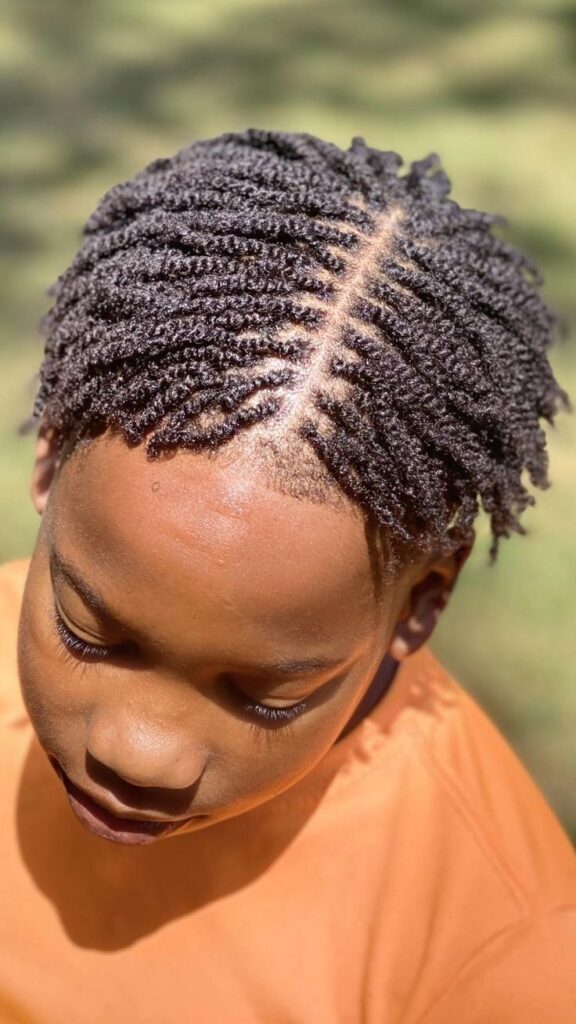
Flat twists lie close to the scalp instead of hanging freely, similar in shape to cornrows but using a twisting motion.
This style suits boys who want a neat, structured look without full braids.
It works especially well as a base under other styles, like a puff or twist-out.
A light gel along the part keeps the rows looking crisp.

11. Finger Coils
Finger coils twirl small sections of hair around a single finger to create tight, defined spirals.
This style suits shorter natural hair especially well.
It gives a soft, natural coil pattern without needing any special tools, which makes it an easy style to try at home.
A curl cream applied before coiling helps the spirals hold their shape longer through the week.

12. Comb Coils
Comb coils use a small comb instead of a finger to twist and shape each coil section.
This style suits shorter to medium coily hair.
The comb makes it easier to create thin, even coils across the whole head.
This technique often works faster than finger coiling once the motion is practiced.

Locs Styles
Locs offer a longer-term styling option that suits coily hair patterns especially well.
This category ranges from early starter locs to more established, freeform styles that need very little daily attention.
Regular moisture and gentle handling help these styles look their best as they mature over time.
Choosing between a more structured loc style and a freeform approach usually comes down to how much maintenance a family wants to keep up with.
13. Starter Locs
Starter locs are the earliest stage of the loc journey, usually created through two-strand twists or coils that will lock over time.
This style suits any coily hair type ready to begin the process.
Patience during this early stage helps the locs form evenly and reduces frizz later.
Regular check-ins with a loc specialist help guide healthy growth.

14. Freeform Locs
Freeform locs grow naturally without regular retwisting, letting the hair lock on its own timeline.
This style suits boys and parents who prefer a hands-off approach to maintenance.
Occasional separating keeps individual locs from merging together as they grow.
This natural approach also tends to require the least daily upkeep of any loc style.

15. Short Locs
Short locs sit close to the head and suit boys just starting to grow out this style.
They need minimal daily maintenance once the locs are established and mature.
A light oil helps keep the scalp comfortable between retwisting sessions.
Signs Your Child’s Hair Is Healthy is a good read while locs are still settling in during the early months.

16. Semi-Freeform Locs
Semi-freeform locs combine occasional light maintenance with long stretches of natural, hands-off growth.
This style suits families who want some structure without the full commitment of regular retwisting.
A loc specialist can help guide the shape during the occasional maintenance visit.
This middle-ground approach often produces a fuller, more natural-looking result over time.
Everyday Curly and Protective Styles
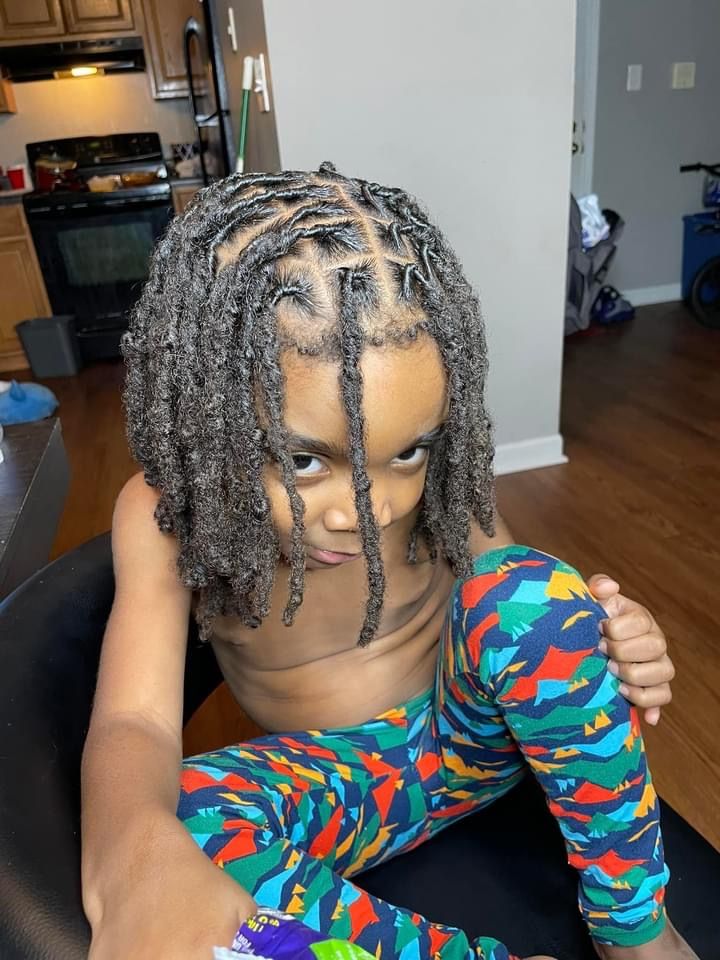
This final category covers versatile natural styles that work for daily wear, protective days, and everything in between.
Most of these styles need only a light cream or spray rather than heavy daily styling, which makes them a solid choice for busy mornings.
A few double as protective options, tucking hair away while still leaving some texture visible on top.
The Best Hair Oils for Children’s Hair is worth a look no matter which style from this group you choose, since moisture plays a big role in how these styles hold up day to day.
17. Short Curls with Taper
Short curls with a taper keep length trimmed close but still visible on top, paired with a gradually tapered side.
It suits boys who want a low-maintenance option that still shows off natural texture.
A small amount of curl cream keeps the shorter curls defined throughout the day.
This length also grows out easily into other longer styles from this list later on.

18. Curly Top with Taper
This style pairs a soft taper on the sides with fuller curls left on top.
It suits medium to thick curly hair that holds shape well.
A curl-defining cream helps the top stay soft and separated rather than clumping together.
This gentler fade suits boys who are new to shorter sides.

19. Curly Shag
The curly shag layers natural hair throughout for a relaxed, textured shape.
This style suits medium to long curly or coily hair especially well.
Minimal styling is needed since the layers create movement on their own without much product.
This low-effort style works well for busy school mornings.

20. Curly Mullet
The curly mullet keeps the front and sides shorter while leaving length at the back to curl naturally.
This retro style suits nearly any curl or coil pattern.
A bit of texturizing spray adds definition to the back section.
Should You Trim Your Child’s Hair Regularly? helps explain how to balance trims up front with growth left at the back.

21. Curly Mohawk
The curly mohawk keeps a full strip of curls or coils down the center while the sides are cut close or shaved.
It suits thick, springy textures best. Scrunching a curl cream into the center strip helps define the shape and reduce frizz.
This bold style suits special occasions or an everyday statement look.

22. Wash-and-Go
The wash-and-go style relies on the natural curl or coil pattern with little to no cutting or heat styling involved.
How Often Should You Wash Your Child’s Hair? covers a good starting routine for this style.
A good leave-in conditioner is the key product for keeping this look defined.
Scrunching gently while damp helps encourage natural curl clumping.

23. Braided Puff
The braided puff combines a few small braids leading up into a puff gathered at the crown or back of the head.
This style suits shorter to medium natural hair that holds volume well in the puff section.
It works well for active days since the puff stays secure through movement.
Satin Bonnets for Kids: Do They Help? covers a good way to protect this style overnight so it lasts a bit longer.

Common Mistakes to Avoid With Natural Hairstyles
Skipping moisture is one of the most common mistakes across nearly every one of these natural hairstyles for boys, since dry hair tends to look frizzy or undefined.
How to Build a Healthy Hair Routine for Kids covers a good starting point for a consistent moisture schedule.
A light oil or leave-in a few times a week makes a real difference in how any of these styles hold up.
Using the wrong comb or brush can cause unnecessary breakage, especially on tightly coiled or curly hair.
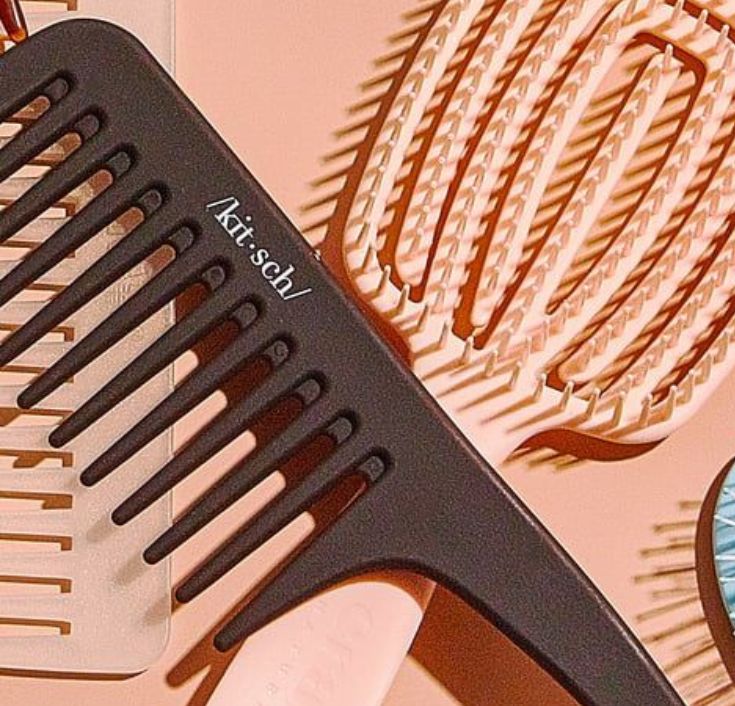
Wide-Tooth Comb vs Detangling Brush covers which tools suit different textures best. The right tool makes detangling much less stressful for everyone involved, especially before twisting or coiling.
Twisting or coiling hair while it is too dry can lead to extra frizz and a style that does not hold its shape.
The Best Detangling Sprays for Kids covers a few options that make this part of the process easier.
Applying a leave-in conditioner or cream to damp hair before styling usually gives a cleaner, longer-lasting result overall.
Skipping regular retwisting or maintenance on styles like locs or twists can also cause matting and buildup over time.
Healthy Habits That Support Kids Hair Growth covers habits that support a healthier scalp underneath any natural style.
Finally, over-styling with heavy products can weigh curls and coils down and hide their natural shape.
The Best Scalp Care Routine for Children covers a simpler approach that keeps both the scalp and the hair looking its best.
Frequently Asked Questions
How often should natural hairstyles for boys be redone?
Twists and coils typically need to be redone every one to three weeks, depending on how quickly they loosen.
Locs need much less frequent attention, often going four to eight weeks between maintenance sessions.
Checking the style regularly helps you find the right timeline for your child’s hair.
What products work best for natural hair?
A leave-in conditioner or curl cream is usually the most important product for keeping natural hair defined and moisturized.
Leave-In Conditioner vs Hair Milk for Kids breaks down which option might work best for different textures.
A small amount applied to damp hair usually works better than a heavy layer on dry hair.
Can loose curls hold a fade well?
Yes, fades work on nearly any curl or coil pattern, though looser curls may need a bit more product to stay defined against the contrast of a fade.
A skilled barber can adjust the fade height based on how the hair naturally falls.
Bringing a reference photo helps communicate the exact look you want.
How do I keep twists or locs looking healthy?
Regular moisture and gentle handling make the biggest difference for twisted or locked styles.
How to Keep Kids’ Scalp Healthy covers a few habits that support healthier growth over time.
Sleeping in a satin bonnet also helps protect these styles overnight.
What is the easiest natural style to maintain?
A wash-and-go or a short curly top with a taper are usually the easiest options, since both rely on the natural pattern with little extra styling required.
These are a great starting point for boys who are newer to natural hairstyles.
A simple leave-in spray in the morning is often all it takes to refresh the look.
Should natural hair be cut wet or dry?
Many barbers prefer cutting curly or coily hair dry so the natural pattern and shrinkage are visible during the cut.
The Different Kids Hair Textures Explained can help explain how much a specific pattern tends to shrink once dry.
Bringing this up with the barber ahead of time helps set clear expectations.
Final Thoughts
With 23 natural hairstyles for boys to choose from, there is a style here for nearly every texture, length, and personality.
Whether the goal is a low-maintenance wash-and-go look or a longer-term style like locs, trying something new now and then can turn styling day into something worth looking forward to.
Healthy, moisturized hair makes nearly every style on this list easier to maintain and better looking day to day.
Taking time to learn what a specific texture responds well to often matters more than chasing any single trending style.
For more style inspiration to bring to the next barber visit, 50 Stylish Haircuts for Boys and 41 Easy Hairstyles for Boys With Curly Hair are both worth adding to the list.