
Twists for Boys: Everything Parents Should Know
Disclosure: Some of the links in this post are affiliate links. This means if you click on the link and purchase an item, I will receive an affiliate commission at no extra cost to you.
Every parent wants a hairstyle that looks good, feels comfortable, and actually protects their son’s hair while he plays, naps, and grows.
That is exactly why twists for boys have become such a popular pick in so many households this year.
Twists are simple to create, gentle on the scalp, and they come in styles that fit almost any age or hair length.
They also tie neatly into a bigger goal most parents share, which is helping their child build how to build a healthy hair growth routine for kids early on.
Once you learn the basics of twists for boys, you will notice how quickly they become part of your normal routine rather than a stressful chore.
Many families even look back on these small styling sessions as some of their favorite quiet moments together, filled with easy conversation and a bit of quiet bonding time.
If you are new to natural hair care in general, the complete beginner’s guide to kids hair care is a great place to start before diving into twist techniques.
From there, this guide walks you through every twist style, method, and maintenance tip you need.
What Are Twists and Why Parents Love Them
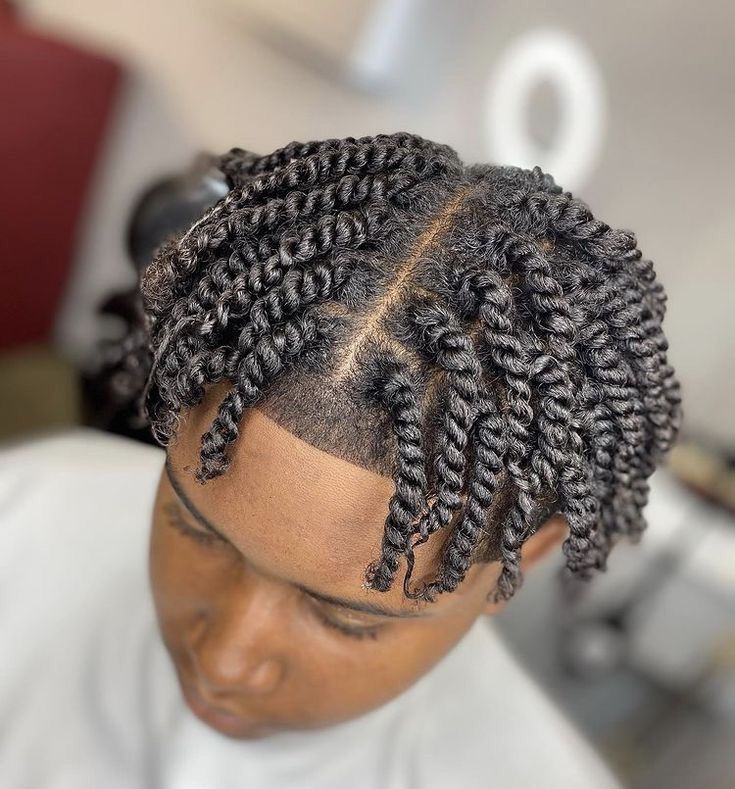
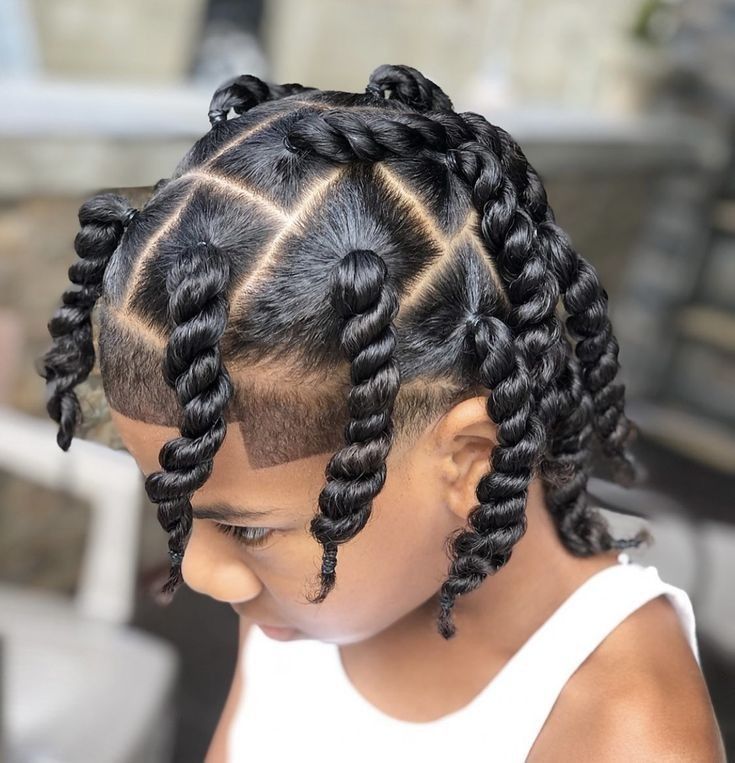
Twists are a natural hairstyle created by wrapping two sections of hair around each other, or by twisting a single section with a tool like a sponge.
They work on nearly every curl pattern, from loose waves to tight coils. Twists sit close to the scalp or hang loose, depending on the style chosen.
They protect the hair’s ends from rubbing against clothing and pillows, which helps reduce breakage over time.
Many parents also love that twists take far less time than braiding, especially for boys who do not enjoy sitting still.
Twists also give parents a simple way to practice sectioning and handling hair without committing to a more complex style right away.
Learning how to identify your child’s hair type first can help you choose twist sizes that actually suit your son’s curl pattern.
Types of Twist Hairstyles for Boys
Twists come in several forms, and each one offers a slightly different look and level of upkeep.
Knowing the differences helps you choose the right style for your son’s hair length, texture, and activity level.
Some styles work better for school mornings, while others suit weekends or special occasions.
Trying a few different types over time also helps you learn what your child’s hair responds to best.
Twists for boys are not one single style, but a whole family of techniques worth exploring.
Two-Strand Twists
Two-strand twists are the most classic and widely used twist style for boys.
Two sections of hair are twisted around each other from root to tip, creating a rope-like pattern.
This style works on short, medium, or long hair, and it holds up well for a week or more with proper care.
Two-strand twists are also a gentle entry point for parents who are just starting to learn twisting.

Mini Twists
Mini twists use very small sections of hair, which creates a fuller, more textured look across the whole head.
This style takes longer to install but tends to last several weeks with the right maintenance.
Mini twists work especially well for boys with medium to long hair who want extra volume.
Because the sections are so small, they also reduce tension on any single part of the scalp.
Flat Twists
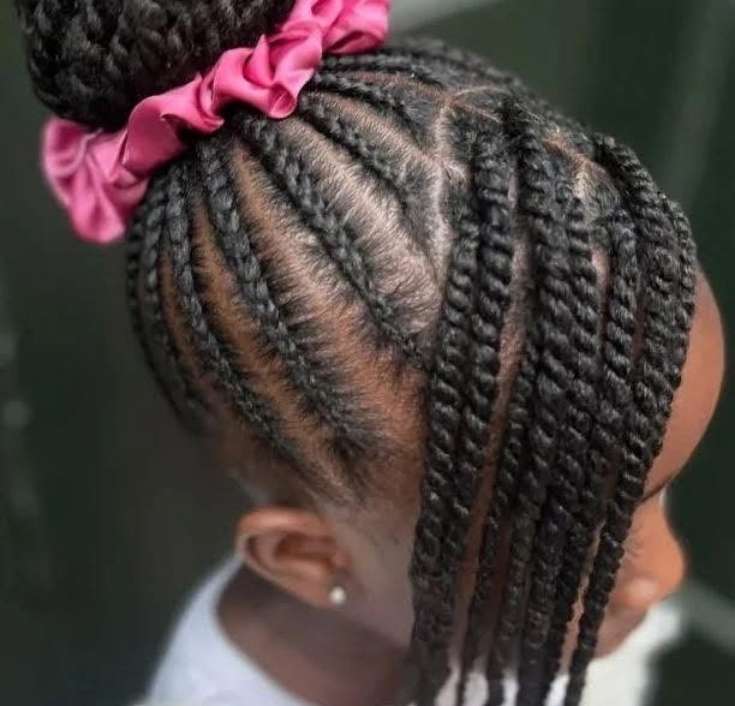
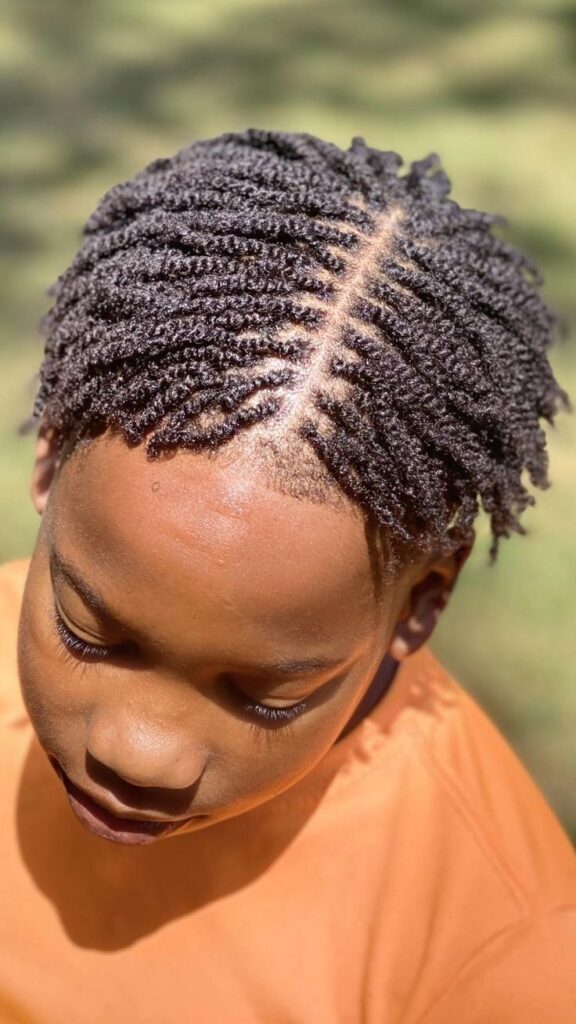
Flat twists lie close to the scalp instead of hanging freely, giving a neat and structured appearance.
This style is a great option for active boys since it stays in place during sports and rough play.
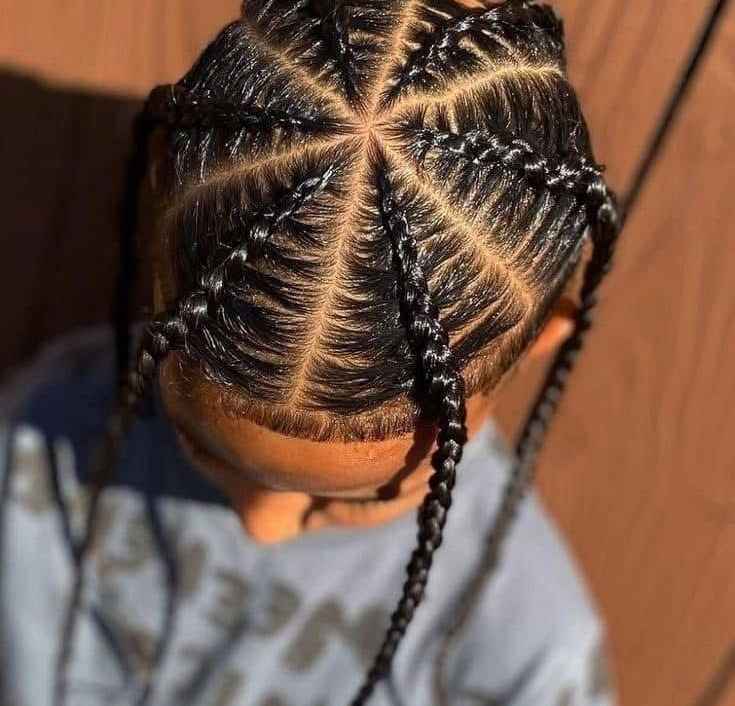
Flat twists can be styled straight back, in curved rows, or even in creative patterns.
They pair well with 35 cornrow styles for kids if you want to mix twist and braid techniques in one look.

Sponge Twists
Sponge twists use a special twisting sponge to create quick, uniform coils across the hair.
This method works fastest on shorter natural hair and gives a soft, defined texture without much effort.
Many parents like sponge twists for busy mornings since the whole process takes only a few minutes.
The results are looser than traditional twists, so this style suits boys who prefer a more relaxed look.
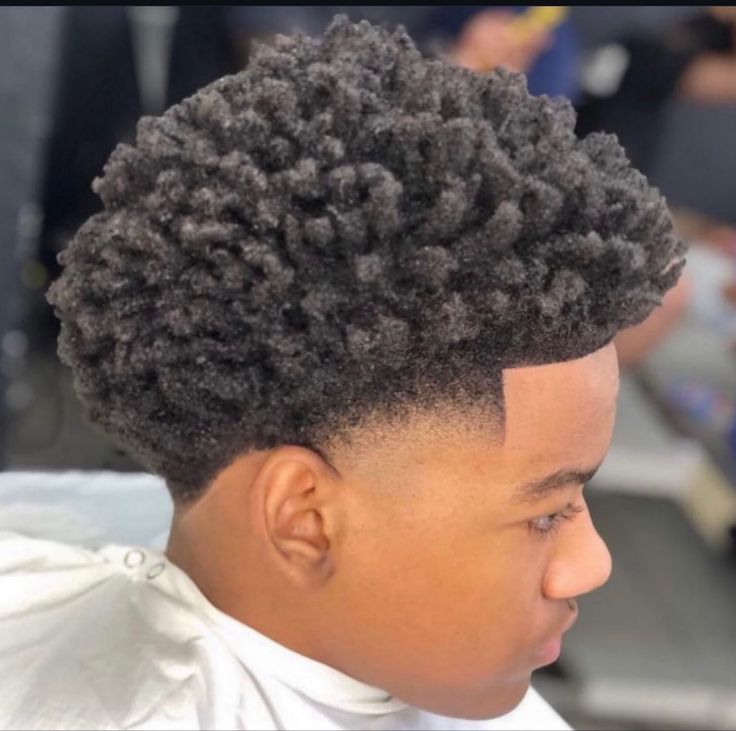
Barrel Twists
Barrel twists use larger, thicker sections of hair to create a bold, chunky twist pattern.
This style works especially well on medium to long hair, since the extra length shows off the thickness.
Barrel twists take less time to install than smaller twist styles, which makes them a good pick for busy schedules.
They also hold their shape well, making them a solid choice for boys who want a low-maintenance, statement-making look.

Twists with Fades
Twists with fades combine the texture of twisted hair on top with a closely shaved or tapered side.
This look works well for boys who want something that reads as more of a haircut than a full protective style.
It pairs the low maintenance of a fade with the texture of twisted hair up top.
23 cute haircuts for boys has more fade-based ideas if this combination style appeals to you.
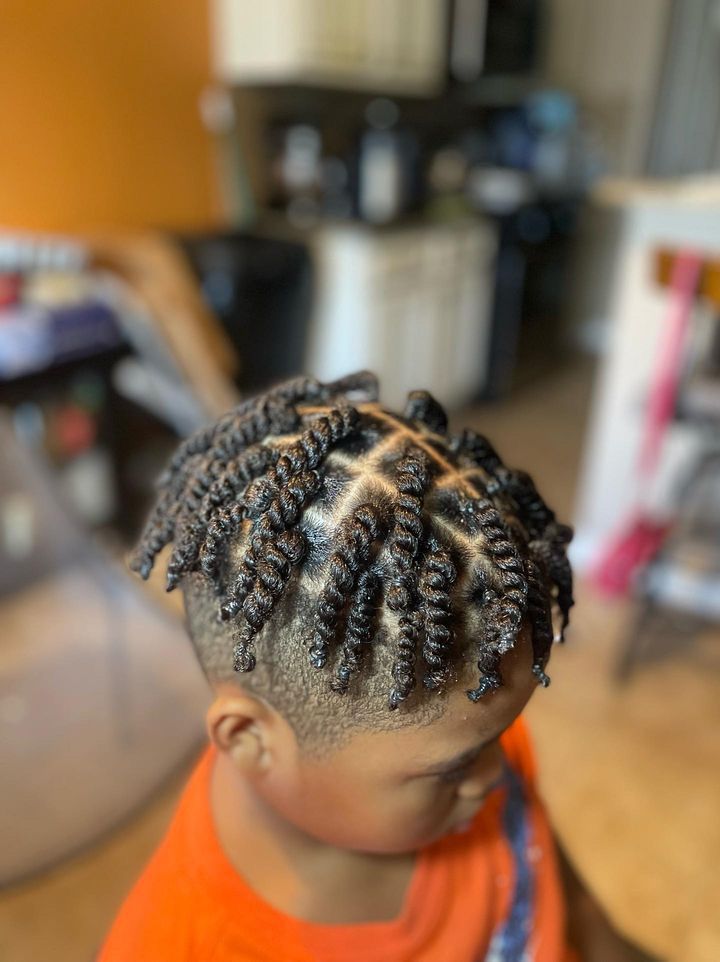
How to Twist Your Son’s Hair at Home
Learning to twist at home takes some practice, but the technique becomes much easier after a few tries.
Start with clean, detangled, and slightly damp hair for the smoothest results.
Apply a leave-in conditioner or twisting cream to add moisture and hold before you begin sectioning.
Use a rat-tail comb to create clean, even parts across the scalp, since uneven parts can make the finished twists look messy.
Take your time on the first few sections so your son gets used to the feeling and stays relatively still.
The secret to tear-free detangling is worth reading before you start, since smooth, tangle-free hair makes the entire twisting process go faster.
Divide each section into two even pieces and cross them over each other repeatedly down the length of the hair.
Keep tension light and even, since pulling too tight can cause discomfort and stress on the hairline.
Secure the ends with a small elastic band or a light styling product to prevent unraveling.
Once you finish, a small amount of lightweight oil can help smooth any flyaways and add shine.
If your son has a busy week ahead, pairing this with 17 protective hairstyles for active kids can help the style last even longer.
Taking short breaks between sections keeps younger boys more patient throughout the process.
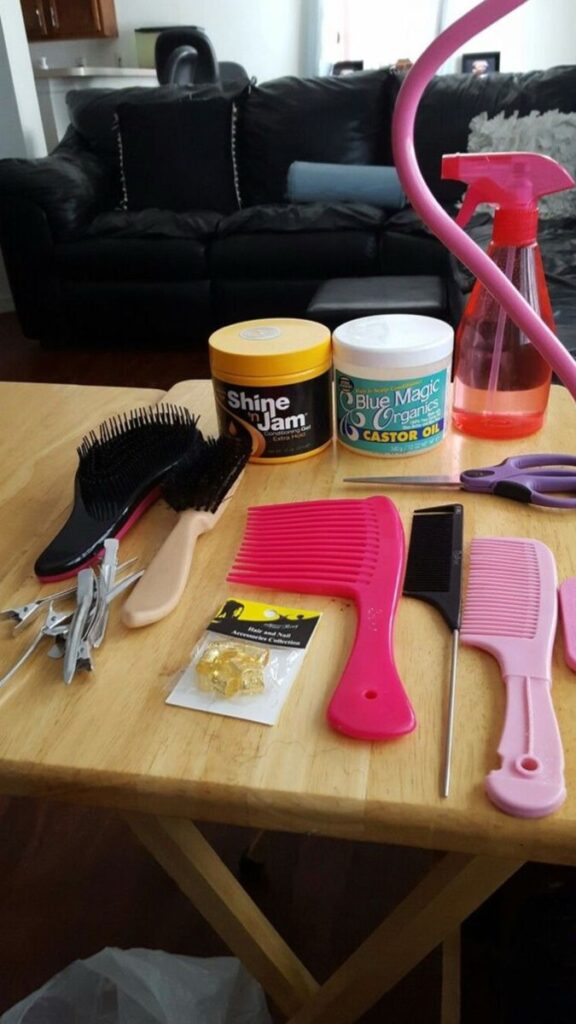
Having the right tools on hand also makes a real difference in how smooth the session goes.
A wide-tooth comb, a spray bottle of water, sectioning clips, and a lightweight twisting cream cover most of what you need.
The best hair brushes for kids breaks down which detangling tools work best for different hair textures.
Setting up everything before you start means fewer interruptions once your son is sitting still and ready to go for the session.
How Long Twists Last and How to Maintain Them
Twists typically last anywhere from one to three weeks, depending on the size of the twists and how active your child is.
Smaller twists tend to hold their shape longer than larger, chunkier ones. At night, a satin bonnet or scarf helps protect the twists from friction while your child sleeps.
Satin bonnets for kids: do they help? covers exactly why this small step makes such a big difference for style longevity.
Light moisturizing every few days keeps the hair and scalp from drying out while the twists are in.
A water-based spray or light hair milk works well without weighing the twists down. Leave-in conditioner vs hair milk for kids compares the two options so you can decide which fits your son’s hair best.
Avoid heavy oils directly on the scalp, since buildup can make twists look dull and greasy faster. When the style starts looking fuzzy or the roots grow out noticeably, it is usually time for a fresh set.
Washing hair while twists are still installed takes a slightly different approach than a normal wash day.
Diluted shampoo applied gently at the scalp, followed by a light rinse, helps avoid unraveling the twists.
How often should you wash your child’s hair? and the best wash day routine for kids both offer helpful guidance for washing around a protective style without undoing all your hard work.
Common Mistakes Parents Make With Twists
A few small habits can shorten how long twists last or even cause damage over time.
Knowing what to avoid helps protect your son’s hair while still enjoying the style.
Most of these mistakes are easy to fix once you know what to look for.
Twisting Hair That Is Too Dry
Dry hair is far more likely to break during the twisting process, especially at the ends.
Always work with hair that still holds some moisture, either from a leave-in conditioner or a light water spray.
How to moisturize kids hair properly goes into more detail on getting this step right before any protective style.
Twisting Too Tightly
Twisting hair too tightly can pull at the hairline and cause discomfort, redness, or even hair loss over time.
The goal is a secure twist, not the tightest one possible.
If your child winces or complains during the process, it is a sign to ease up on the tension immediately.
Leaving Twists in Too Long
Leaving twists in for many weeks without any care in between can lead to matting and tangling at the roots.
Even protective styles need attention, including light moisturizing and gentle scalp massages.
The biggest braiding mistake that can lead to hair loss applies to twists too, since prolonged tension is the common thread.
Skipping Nighttime Protection
Skipping a bonnet or scarf at night lets twists rub against cotton pillowcases, which causes frizz and breakage.
This one small habit change can add days or even weeks to how fresh a style looks.
It is one of the easiest steps to build into an existing bedtime routine.
Using the Wrong Products
Using heavy, greasy products can weigh twists down and leave buildup at the scalp within just a few days.
The best hair oils for children’s hair and how to choose the right shampoo for kids both help you pick lighter options that support twists rather than working against them.
The right products make twists easier to maintain from install day through take-down.
Benefits of Twists for Boys’ Hair Health
Twists offer real benefits beyond just looking neat and put together.
Because the hair is bundled and protected, twists reduce the everyday friction that leads to split ends and breakage.
They also make it easier to keep moisture locked into the hair strand for longer stretches of time.
Twists require less daily manipulation than styles that need constant combing or restyling, which is gentler on delicate hair.
Over time, many parents notice their child’s hair grows longer and healthier simply because it is being handled less often.
Twists also make it easier to keep track of hair health, since you can check for dryness or breakage during each installation without needing to detangle the whole head every day.
Pairing twists with how to encourage healthy hair growth in kids gives you a fuller picture of how protective styles support length retention.
Twists for boys also build a foundation of good habits that carry into other protective styles later on, including braids and locs.
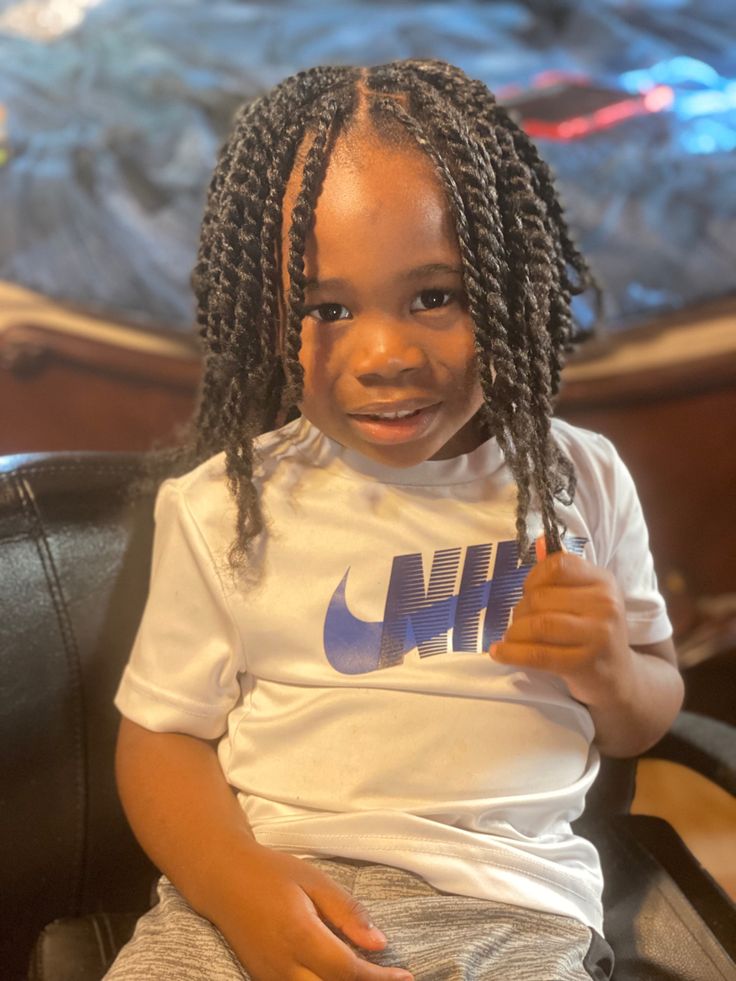
Choosing the Right Twist Size for Your Son
Twist size makes a real difference in how a style looks, how long it lasts, and how comfortable it feels for your son.
Smaller twists take longer to install but tend to hold their shape for several weeks at a time.
Larger twists go in faster and work well for boys who get restless during longer styling sessions.
Hair length also plays a role, since very short hair usually looks best with smaller, closer twists.
Thicker hair can often handle bigger sections without looking bulky, while finer hair tends to hold a neater shape with smaller twists.
Trying a couple of different sizes over time is the easiest way to find what suits your son’s hair, personality, and daily activity level best.
Many parents settle into a favorite size for twists for boys once they see how it holds up week to week.
Frequently Asked Questions
How long do twists last on boys?
Twists usually last between one and three weeks, depending on their size and your child’s activity level.
Smaller, tighter twists tend to hold their shape longer than bigger ones.
Regular nighttime protection and light moisturizing both help extend that timeline.
Are twists good for hair growth?
Twists do not make hair grow faster, but they protect the hair from daily damage that leads to breakage.
Less breakage means the hair you already have gets to stay longer and look fuller over time.
This makes twists a smart choice for anyone focused on length retention.
Can twists be done on short hair?
Yes, twists can be done on hair as short as one to two inches, though very short hair may need extra product for hold.
Sponge twists in particular work well on shorter lengths.
As the hair grows, styling options naturally expand.
How often should twists be redone?
Most families redo twists every two to three weeks, though this depends on how quickly the roots grow out.
Watching for frizz, tangling, or a fuzzy appearance is a good way to judge timing.
There is no single rule that fits every child’s hair.
Do twists cause hair loss?
Twists themselves do not cause hair loss when done correctly with light, even tension.
Problems only happen when twists are installed too tightly or left in for too long without care.
Following gentle techniques keeps this style safe for regular, repeated use throughout the year.
What is the difference between twists and braids?
Twists use two sections wrapped around each other, while braids use three or more sections woven together.
Both are protective styles, but twists tend to be faster to install and gentler on tender scalps.
31 best braided hairstyles for kids is a good next stop if you want to compare the two side by side.

Final Thoughts
Twists for boys offer a simple, protective, and genuinely low-maintenance way to style natural hair.
With a bit of practice, most parents find the twisting process becomes second nature within just a few tries.
The style works for nearly any age, hair length, or texture, which makes it such a flexible option.
Taking care of the twists in between installs, through moisturizing and nighttime protection, keeps hair healthy for the long run.
Twists for boys can also be a great starting point before trying more advanced protective styles down the road.
If you are looking for more ideas to pair with twists, 75 cute kids hairstyles you’ll want to save and 50 stylish haircuts for boys are both great places to keep exploring.